HYUNDAI 177.HY1I16 Fuel Door Filler
fits model: Genesis. make: Hyundai. year: 2016.
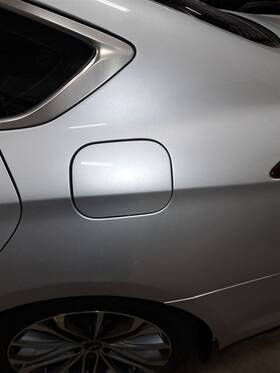
( Part Type: Fuel Door Filler ), ( Conditions Options: Fuel Door ), ( Genuine Oem: Yes ), ( Ipn: 177.hy1i16 ), ( Descriptionpartcondition: Silver-y6s, Fuel Door )
Review HYUNDAI Fuel Filler Door Sku#4396969 fits GENESIS 2016
The **Hyundai 177.HY1I16 2016 Genesis Fuel Filler Door** is a precision-engineered component designed to seamlessly integrate with the luxury-oriented **Genesis G70** (or related models) from the 2016 model year, embodying both form and function with Hyundai s signature blend of durability and aesthetic refinement. Crafted from high-grade **galvanized steel**, this fuel filler door is engineered to withstand the rigors of daily use while resisting corrosion, ensuring long-term reliability even in harsh environmental conditions. The door features a **smooth, contoured design** that complements the vehicle s sleek, aerodynamic profile, with clean lines and subtle creases that enhance its premium appearance. Its **integrated fuel cap release mechanism** is strategically positioned for easy access, allowing drivers to open the door effortlessly with a simple press of a button or manual lever, depending on the vehicle s configuration.
The **2016 Genesis fuel filler door** is equipped with a **secure locking system**, including a **child safety lock** to prevent unintended access, which is particularly useful for families or drivers who prioritize safety. The door s **weatherstripping** is meticulously sealed to block out dust, debris, and moisture, maintaining the vehicle s interior cleanliness and protecting the fuel system from contaminants. Inside, the door houses a **reinforced latch mechanism**, ensuring a tight, vibration-free closure that minimizes noise and drafts while driving. The **interior trim** is finished in a high-quality, **textured plastic or soft-touch material**, depending on the trim level, providing a tactile contrast that enhances the cabin s premium feel.
For installation, the **2016 Genesis fuel filler door** is designed to fit snugly within the vehicle s body structure, requiring minimal adjustments to align with the surrounding panels. The **mounting points** are reinforced with **self-tapping screws or rivets**, depending on the assembly process, ensuring a secure and permanent attachment. The door s **electrical connections** (if applicable, such as for an integrated fuel gauge or fuel cap sensor) are routed through a **protected wiring harness**, safeguarding against wear and tear. Whether replacing a damaged door, upgrading for aesthetic consistency, or addressing a recall-related part, this **OEM-quality fuel filler door** from Hyundai delivers the same level of craftsmanship found in the original equipment, ensuring a perfect fit and seamless performance. Ideal for mechanics, auto enthusiasts, or dealerships, this component is a testament to Hyundai s commitment to both **performance and luxury** in its Genesis lineup.
### **Pros and Cons of Buying a 2016 Hyundai Genesis 1.7L (G70) with a Fuel Filler Door Issue**
#### **Pros**
1. **Reliable Engine and Transmission**
The 1.7L GDI (Hy1i16) engine in the 2016 Genesis G70 is a well-regarded turbocharged four-cylinder, known for decent power output (around 180 190 hp) and smooth operation when maintained properly. Many owners report few major engine issues if serviced regularly. The automatic transmission (6-speed dual-clutch or 6-speed conventional) is generally reliable, though some early models had minor software glitches that were addressed in updates.
2. **Comfortable and Spacious Interior**
The Genesis G70 offers a premium feel with high-quality materials in the mid-to-upper trims, a quiet cabin, and good sound insulation. The rear seats provide ample legroom, and the cargo space is generous (around 15.3 cu. ft. behind the rear seats, expandable to 56.3 cu. ft. with seats folded). The driving position is ergonomic, and the steering wheel is well-placed for comfort on long trips.
3. **Safety Features**
The 2016 model comes standard with Hyundai s **SmartSense** suite (in higher trims), which includes:- Forward Collision Warning (FCW)
- Automatic Emergency Braking (AEB)
- Blind-Spot Collision-Avoidance Assist (BCA)
- Lane Keeping Assist (LKA)
- High Beam Control
- Adaptive Cruise Control (on select trims)
These features are rare in this segment and significantly enhance safety. The vehicle also earned a **Good** rating in the IIHS frontal offset crash test and **Marginal** in the side impact test, though it performed well in rollover protection.
4. **Fuel Economy (Compared to Competitors)**
While not exceptional (around **20 25 MPG city / 28 32 MPG highway** for the automatic), the Genesis offers better fuel efficiency than many luxury sedans in its class (e.g., BMW 3 Series, Audi A4). The turbocharged engine provides a good balance of power and efficiency for daily driving.
5. **Resale Value and Brand Reputation**
Hyundai has improved its reputation significantly in recent years, and the Genesis brand, in particular, is now seen as a strong contender against German luxury brands. The 2016 model holds its value relatively well for a non-luxury brand, especially if well-maintained. Hyundai s warranty (3-year/36,000-mile bumper-to-bumper) is still in effect for many buyers, providing peace of mind.
6. **Tech and Infotainment**
The Genesis comes with a **7-inch touchscreen** (or larger in higher trims) with **Apple CarPlay and Android Auto**, which are user-friendly and well-integrated. Bluetooth connectivity, USB ports, and a decent sound system are standard. The **Hyundai Connected Services** app allows remote diagnostics and some vehicle control, though connectivity can be hit-or-miss depending on the trim.
7. **Low Maintenance Costs (Compared to Luxury Brands)**
Parts and labor for Hyundai are generally cheaper than those for German or Japanese luxury brands. Regular maintenance (oil changes, timing belt, spark plugs) is affordable, and the turbocharged engine, while requiring more attention than a naturally aspirated one, is not overly complex.
8. **Good Handling and Ride Quality**
The G70 has a **sport-tuned suspension** (on higher trims) that provides a balanced mix of comfort and responsiveness. The steering is precise, and the car handles well for its size, making it enjoyable to drive on both highways and winding roads.
---
#### **Cons**
1. **Fuel Filler Door Issue (Specific to This Vehicle)**
The fuel filler door not working properly is a **major concern** and could indicate:- **Electrical or wiring problems** (common in some Hyundai models due to poor wiring harness quality).
- **Faulty door actuator or motor** (a relatively inexpensive fix if the issue is mechanical).
- **Software glitch** (may require a dealer diagnostic scan).
- **Water or corrosion damage** (if the vehicle has been driven in wet conditions frequently).
- **Stuck or misaligned latch** (could be due to wear or debris).
**Potential Risks:**- If the door is stuck open, it s a safety hazard (risk of spills, theft, or accidental fuel leaks).
- If it won t open at all, you ll need to carry a spare key or use a manual override (if available).
- A recurring issue could point to deeper electrical problems in the vehicle.
**Recommendation:**- **Get a professional diagnosis** (preferably at a Hyundai dealership or a trusted mechanic) to determine if the issue is electrical, mechanical, or software-related.
- **Check if the problem is intermittent** if it only happens in certain conditions (e.g., after rain), it may be fixable.
- **Budget for repairs** if the actuator or wiring needs replacement, costs could range from **$100 $300** (parts labor).
2. **Turbocharged Engine Reliability Concerns**
While the 1.7L GDI engine is generally reliable, **turbocharged engines require more maintenance** than naturally aspirated ones:- **Oil changes must be frequent** (every **5,000 7,500 miles** with synthetic oil to prevent turbo carbon buildup).
- **Timing belt and water pump replacement** (if applicable) should be done at the manufacturer s recommended interval (usually **60,000 100,000 miles**).
- **Carbon buildup on intake valves** can occur if oil changes are neglected, leading to **rough idling, misfires, or reduced power**.
- **Turbo failure** (though rare in this engine) can be expensive to repair if not caught early.
**Recommendation:**- **Verify maintenance history** ask for proof of oil changes, timing belt replacements, and any turbo-related work.
- **Check for symptoms of turbo issues** (whining noise under acceleration, excessive smoke, loss of power).
3. **Infotainment and Tech Glitches**
- The **touchscreen can be slow or unresponsive** at times, especially in cold weather.
- **Bluetooth connectivity issues** (pairing problems, audio cutouts) are occasionally reported.
- **Apple CarPlay/Android Auto may lag** or freeze occasionally.
**Recommendation:**- Test the infotainment system thoroughly before purchasing.
- Check if the seller has already had any software updates applied.
4. **Interior Quality Variability**
- Lower trims (e.g., **2.0L or 1.7L base models**) may have **cheaper plastics and less sound insulation** compared to higher trims.
- Some owners report **squeaks and rattles** in the cabin, especially in older models.
**Recommendation:**- Inspect the interior closely for wear, loose panels, or poor stitching.
5. **Resale Depreciation**
- While Hyundai holds its value better than some competitors, the Genesis brand still depreciates faster than true luxury brands (e.g., BMW, Mercedes).
- If you plan to sell later, this may not be a major concern, but it s worth noting.
6. **Minor Transmission Issues (Early Models)**
- Some **2016 Genesis G70 models with the 6-speed dual-clutch transmission (DCT)** reported **rough shifting or delayed engagement**, particularly in cold weather.
- **Conventional automatic transmissions** were generally smoother.
**Recommendation:**- If the vehicle has a DCT, **test drive it in different temperatures** to check for shifting issues.
7. **Rust Concerns (Especially in Snowy/Corrosive Areas)**
- Hyundai has had **rust issues in the past**, particularly in the **wheel wells, rocker panels, and undercarriage**.
- **Inspect the vehicle thoroughly** for rust, especially if it was driven in **snowy, salty, or humid climates**.
**Recommendation:**- Check under the car for rust, and ask for maintenance records showing rust treatments.
---
### **Conclusion**
The **2016 Hyundai Genesis G70 with a 1.7L turbo engine** is a **solid mid-size sedan** that offers a **comfortable ride, good safety features, and reliable performance** when properly maintained. However, the **fuel filler door issue** is a **red flag** that requires immediate attention. Whether this is a simple fix (e.g., actuator replacement) or a sign of deeper electrical problems will determine the vehicle s long-term viability.
**If the fuel filler door issue is isolated and fixable for under $300 $500**, the Genesis could be a **great value** especially if the rest of the vehicle is well-maintained. It competes favorably with **BMW 3 Series, Audi A4, and Lexus ES** in terms of comfort, tech, and safety at a fraction of the price.
**If the fuel filler door problem is part of a larger electrical or mechanical issue**, or if the vehicle
Details:
Manual transmissions do not include any part of the clutch system. Power Steering Gear: Includes Pittman arm. Does not include bulbs. Fan Assembly: Includes motors, shroud, and blades.
Temperature Control: Includes all knobs, buttons, and sliders. Coolant Overflow Bottle: Cap is included. Our Part #: 177.HY1I16, 4396969. Most of the time we include paint code in our part notes.
Control Arm: Includes the ball joint and any bushings. Does not include bolts/hardware. Claims that result from overheating due to cooling system failure. Please see the fitment section below to make sure this will fit your vehicle.
It may have minor scratches and clear coat peeling. Does not include window/lock switches. A/C Compressor: Includes the clutch/pulley assembly. Jack: See part notes.
SILVER-Y6S,FUEL DOOR. Column Switch: Includes wiring if applicable up to the first point it can be unplugged. Cowl Vent Panel: See Our Part notes, often sold as one side only. I only see photos of the vehicle and not actual part you are selling.
Spindle/Knuckle: Does not include hub unless noted. Exhaust Manifold: Does not include turbo where applicable. This is still a fairly nice looking, used wheel. This is on a case by basis.
Pay special attention to any options listed. Remote reservoirs and brackets will not be included. This for a USED OEM Fuel Filler Door Assembly pulled from 2016 GENESIS with 93000 actual miles on it. Blower Motor: Include the squirrel cage/fan blade.
Hub: Includes wheel studs. Is this the right part?, This is most common question that we get. Stabilizer Bar: Does not include links or bushings. Ignition Coil s: See part notes.
Starter: Includes solenoid. Differential Carrier: Does not include axles. Fuel Pump: Includes sending unit and any molded hoses that are non-removable. Many newer transmissions require a relearn/programming procedure.
6 MONTH WARRANTY. These parts are not covered under warranty: Intake manifold, fuel injectors, oil pan, sensors, water pump. Slides are not covered under warranty. Rack and Pinion: Includes tie rods but they are not covered under warranty.
Interior Rear View Mirror: Does not included bracket glued to windshield. The fitment information can be confusing if you don't buy replacement parts everyday. Claims that result from the failure of other components. Fuel injectors: See our part notes.
Fuel Filler Door: Includes hinge. Transmission: Automatic transmissions include torque converters and sensors. C Condition, C-COND This wheel will have very noticeable cosmetic issues. A/C Condenser: Sensors and hoses are not included.
Not included: Throttle body, Turbo, wiring harness exhaust manifold may be left on in certain cases. Transfer Case: Does not include electric shift motor. Axle/CV shaft: Does not include the axle nut. Parts installed in vehicles used for commercial, racing, or off-road purposes, parts any purpose other than the original application.
Strut: Struts are left assembled and include top plate, spring, dust boot dust boots on used struts rarely in perfect shape. These wheels are still guaranteed to be straight and true, just not the best looking. B parts have average miles and condition for its age. Window Regulator: Does not include motor unless noted most are with.
It is in average condition for the year and mileage of donor vehicle. Power Steering Pump: Includes pulley and ATTACHED reservoir. Door Trim Panel: Includes handle and armrest. All claims for warranty must be made within this time.
If you don't know what a paint code is or where yours located, please feel free to ask. Here are our part notes about this specific. If noted as assembly, it will include the lug wrench. In the event of a claim, AAA will offer replacement part similar quality.
Mass Airflow Sensor: Does not include housing unless pictured. Caliper: Includes the bracket and slides. Wheel/Rim: Does not include cap, tire, or lug nuts. Alternator: Includes the pulley.
Any brackets are not included. It will have high miles or minor damage. Radio: Pay special attention to our fitment. Wiper Motor: Does not include arms or transmission unless noted.
New fluids, filters, seal, and gaskets must be used in the installation of driveling component. HID headlights include the bulbs and ballast. Wiper Transmission: Does not include motor or arms unless noted. Washer Reservoir/Bottle: Includes cap unless noted.
All lubricants and fluids used must be of the type recommended by manufacturer receipts for installation items accompany claim warranty. B Condition, B-COND This wheel will have some cosmetic imperfections. Whats Included. Sun visor: Does not include clip.
part #: 177.hy1i16 prices
- $70.30-$75.05
specifications cartrimmouldings:
- for models: Genesis
- for makes: Hyundai
- for years: 2016
- part type: Fuel Door Filler
- conditions options: Fuel Door
- genuine oem: Yes
- ipn: 177.hy1i16
- descriptionpartcondition: Silver-y6s, Fuel Door
seller cartrimmouldings:
- city: Rosemount, Minnesota
- # reviews: 68895
- rating: 99.8%
payments cartrimmouldings:
- credit card: Visa
- other
- wallet: Paypal
returns cartrimmouldings:
- paid by: Seller
- time: 60 Days
- policy: Returns Accepted
general cartrimmouldings:
- Car Truck Parts Accessories > Exterior Parts Accessories > Other Exterior Parts Accessories
- condition: Used
shipping cartrimmouldings:
- transit: 2-4 Days
- carrier: UPS
- cost: $0.00
- type: Fixed
- service: UPS Ground
- class: Standard
offer cartrimmouldings:
- started: April 6, 2026
- options: Ship-to-home
- sold: 0
- availability: In Stock
- quantity: 1
Hyundai 4396969 Is Similar To:
- Hyundai 82260s8000 Palisade Front Right Door Window B Pillar Applique Molding Oem 2020-23 (32.2% similar) Donor vehicle: 2020 hyundai palisade SLE 3.6L v6 AWD automatic transmission. Products sold in quantities will show a single image representing the others equal or greater condition. Mileage: 49K miles. Color: black RB5-BECKETTS exterior / NB interior...(November 7th, 2023)
- Hyundai 83260-c1010 2015 2019 Sonata Oe Oem Rh Rear Door Garnish Molding 3f-5 (37.1% similar) You are buying the item that is pictured , passenger rear door front garnish molding...(December 26th, 2023)
- Hyundai 97510-b1000 2015-2019 Genesis G80 Rear Quarter Panel Pressure Vent X2 Oem (42.6% similar) Came off a 2015 hyundai genesis 3.8L track AWD 4 door sedan. 8 speed automatic transmission 4WD - RL45. 92,253 miles...(January 12th, 2024)
- Hyundai 82210gi000 Ioniq 5 Front Left Driver Side Door Window Belt Molding Oem 2022-2024 (32.4% similar) Mileage: 13K miles. Donor vehicle: 2023 hyundai Ionic 5 SLE RWD. Please verify that it fits and is compatible with your specific model before purchasing. All parts including engines, transmissions, transfer cases, differentials, batteries come with a 30 day warranty. This is an item that has been ...(April 16th, 2024)
- Hyundai 8321039000 Weather Strip Belt Xg350 2002 2005 Left Driver Side Rear Back Door Molding Trim (34.2% similar) Part #: hyundai 8321039000 for sale...(May 14th, 2024)
- Hyundai 85881-3s100 2011 2014 Sonata Front Right Side Door Sill Scuff Plate Cover Trim Oem (35.5% similar) Hyundai sonata 2014 . 2011 - 2014 hyundai sonata front right side door sill scuff plate cover trim oem...(August 17th, 2024)
- Hyundai 87731-cw000-ca Genuine 2022-2024 Tucson Lower Door Trim Left (40.6% similar) Sold in quantity: positions: left. Other names: garnish assembly rear Dr side left-hand.: us built. Vehicle fitment, year: make: model: body trim: engine transmission: 2024HYUNDAITUCSONLIMITED, SE, SEL2.5L l4 - gas, 2023HYUNDAITUCSONLIMITED, 2022 HYUNDAITUCSONLIMITED, gas...(August 18th, 2024)
- Hyundai 87731d3000ca Tucson Rear Left Side Door Lower Wheel Arch Flare Molding Oem 2016-2021 (31.6% similar) Please verify that it fits and is compatible with your specific model before purchasing. All parts including engines, transmissions, transfer cases, differentials, batteries come with a 30 day warranty. This is an item that has been previously used. Free shipping is available for most items within ...(August 20th, 2024)
- Hyundai 198-50829l Driver Left Center Pillar Sedan 4 Door Fits 06-11 Accent 115186 (33.8% similar) No expedited shipping is available. Accent 06 us market, SD, 4 Dr, accent 07-11 SD, 4 Dr...(August 24th, 2024)
- Hyundai 82220d3001 Tucson Front Right Passenger Side Door Window Belt Molding Oem 2016-2021 (34.4% similar) This is an item that has been previously used. Please verify that it fits and is compatible with your specific model before purchasing. All parts including engines, transmissions, transfer cases, differentials, batteries come with a 30 day warranty. Free shipping is available for most items within ...(August 26th, 2024)
- Hyundai 177.hy1n13 Fuel Filler Door 2013 Accent Sku 3915270 (67.2% similar) Radio: pay special attention to our fitment. Pay special attention to any options listed. This is still a fairly nice looking, used wheel. All lubricants and fluids used must be of the type recommended by manufacturer receipts for installation items accompany claim warranty. Wheel/rim: does not ...(August 30th, 2024)
