MOPAR 3549196-7 Duster Demon Sport Lower Piller
fits model: Dart. make: Plymouth, Dodge, Mopar. year: 1970–1974.
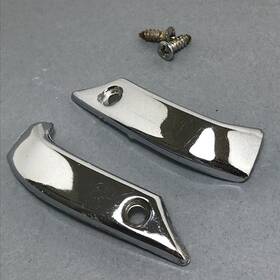
( Brand: Mopar ), ( Ipn: 3549196-7 ), ( Oe/oem Part Number: 3504414-3504415, Plymouth Duster 340 ), ( Duster Twister: Dodge Demon 340, Dart Sport 360 ), ( Attachment Type: Screw ), ( Vintage Part: Yes ), ( Finish: Chrome ), ( Placement On Vehicle: Left, Right, A-piller )
Review MOPAR Plymouth Duster Dodge Demon Sport Lower A piller Trim fits DART 1970–1974
The **Mopar 3549196-7 Lower A-Pillar Assembly** is a meticulously crafted, high-performance replacement part designed specifically for the 1970 through 1974 Plymouth Duster, Dodge Demon, and Dart Sport models, ensuring a perfect fit and seamless integration into your vehicle s structural framework. This essential component plays a critical role in maintaining the integrity of the vehicle s roof and windshield assembly, providing both strength and stability while contributing to the overall rigidity of the body. Crafted from high-quality, durable materials, the lower A-pillar is engineered to withstand the rigors of daily driving, from highway speeds to tight urban maneuvers, without compromising on safety or performance. Its precise engineering ensures that the windshield remains securely aligned, reducing the risk of misalignment or improper sealing, which can lead to drafts, water leaks, or structural weaknesses over time. Whether you re restoring a classic muscle car to its former glory or upgrading an existing vehicle for enhanced durability, this Mopar part delivers the reliability and precision expected from the brand synonymous with American automotive excellence. With its direct compatibility and robust construction, it serves as an ideal solution for enthusiasts seeking to preserve the authenticity and structural soundness of their beloved 1970s-era Mopar vehicles.
### **Pros and Cons of Buying a 1970 1974 Plymouth Duster / Dodge Dart / Demon with the Lower A-Pillar (Part Number 3549196-7)**
#### **Pros**
1. **Rarity and Collectibility** The lower A-pillar (often called the "Demon" or "Sport" front end) is a distinctive and sought-after feature, especially on the Demon and high-end Dart/Duster models. This makes the car more desirable among enthusiasts, potentially increasing its resale value over time.
2. **Distinctive Appearance** The lower A-pillar design gives the car a more aggressive, muscle-car look, differentiating it from standard Dusters and Darts. This can make it stand out at car shows and on the road.
3. **Potential for Performance** Many of these models (especially the Demon) were equipped with high-performance engines (like the 340, 360, or 440) and heavy-duty suspension components. If the car is in good condition, it could be a fun, drivable muscle car with proper restoration.
4. **Aftermarket Support** The Mopar platform (especially the A-body) has a strong aftermarket presence, with parts available for restoration, suspension upgrades, and engine swaps. This makes maintenance and modifications more accessible than on some other vintage muscle cars.
5. **Potential for Customization** The lower A-pillar design allows for unique modifications, such as custom paint schemes, hood scoops, or even full restomods. This can make the car a blank canvas for personalization.
6. **Historical Significance** The Demon was one of Chrysler s first true muscle cars, predating the more famous Challenger and Charger. Owning one connects you to an important era in American automotive history.
---
#### **Cons**
1. **High Maintenance and Restoration Costs** Like most muscle cars from this era, these vehicles often require significant work to be roadworthy. Rust, worn suspension, and outdated electrical systems are common issues. A full restoration can be expensive, especially if the car has been neglected.
2. **Reliability Concerns** Many 1970s Mopars suffer from rust, especially in the frame, floor pans, and wheel wells. The lower A-pillar itself may have hidden corrosion if the car has been exposed to moisture. Electrical systems can also be finicky, requiring patience and expertise to repair.
3. **Engine and Drivetrain Challenges** The original engines (especially the 340 and 440) can be thirsty and prone to oil leaks, head gasket issues, or valve train problems. Modernizing the engine (e.g., with a crate Mopar or small-block Chevy) may be necessary for reliability, but this adds cost.
4. **Limited Availability of Original Parts** While aftermarket parts exist, finding exact original components (especially for the lower A-pillar or specific trim pieces) can be difficult. This may require sourcing from specialty suppliers or restoring with aftermarket alternatives.
5. **Driving Experience Limitations** Some of these cars were built with comfort in mind (especially the Dart/Duster versions), meaning they may not handle or accelerate as sharply as later muscle cars. The lower A-pillar can also affect visibility, especially in tight parking spaces.
6. **Insurance and Storage Costs** Vintage muscle cars often come with higher insurance premiums due to their value and potential for damage. Storage (especially climate-controlled) is also more expensive than for a modern car.
7. **Market Saturation** While the lower A-pillar models are desirable, there are still many Dusters and Darts in circulation. Finding a truly rare or well-preserved example can be competitive, driving up prices for the best specimens.
---
### **Conclusion**
Buying a 1970 1974 Plymouth Duster/Dodge Dart/Demon with the lower A-pillar can be a rewarding experience for an enthusiast who appreciates classic muscle cars and is willing to invest time and money into restoration. The car s unique styling, historical significance, and potential for performance make it a compelling choice for collectors and drivers who enjoy the challenge of bringing a vintage vehicle back to life.
However, the cons particularly the high cost of restoration, reliability issues, and maintenance demands should not be underestimated. This is not a car for someone looking for a low-maintenance, daily driver. Instead, it s best suited for someone with mechanical skills, financial resources, and a passion for preserving automotive history.
If you re set on this project, **prioritize buying a car with minimal rust, a known service history, and a functional engine**. Consider starting with a less expensive model (like a Dart) before investing in a Demon if budget is a concern. If you re not prepared for the work, it may be better to focus on a more modern or lower-maintenance classic.
### **Recommendation**
- **Buy if:** You have mechanical experience, a budget for restoration, and a genuine interest in muscle cars. Look for a car with a clean title, minimal rust, and a serviceable engine.
- **Avoid if:** You want a hassle-free project car, lack mechanical skills, or cannot afford unexpected repair costs.
- **Alternative Approach:** Consider a later model (like a 1971 1976 Challenger or Charger) if you want a more refined muscle car with slightly better reliability, or a restored example if you prefer a ready-to-drive project.
Ultimately, this car is a fantastic choice for the right owner but it demands respect, patience, and dedication.
Details:
There is a surface wear spot next to one of the screw holes. Ships to the lower 48 USA only. 1970-1974 Duster, 1971-72 Dodge Demon, 1973-74 Dart Sport, Trim is in decent shape showing light surface wear fine speckling. Bottom sides have surface pitting, mostly around the screw holes.
Both have their small locating anti-movement post and the attaching screw. 1970 - 1974 Plymouth Duster Dodge Demon Dart Sport lower A-Piller Trim, MOPAR, 1 pair front trim pieces Part #s 3504414 RH, 3504415 LH 2-door fastback model's with vinyl roof or two-tone paint.
specifications cartrimmouldings:
- for models: Dart
- for makes: Plymouth, Dodge, Mopar
- for years: 1970-1974
- brand: Mopar
- ipn: 3549196-7
- oe/oem part number: 3504414-3504415, Plymouth Duster 340
- duster twister: Dodge Demon 340, Dart Sport 360
- attachment type: Screw
- vintage part: Yes
- finish: Chrome
- placement on vehicle: Left, Right, A-piller
general cartrimmouldings:
- Car Truck Parts Accessories > Exterior Parts Accessories > Body Moldings Trims
- condition: Used
seller cartrimmouldings:
- # reviews: 1117
- rating: 99.5%
- city: Belvidere, Illinois
offer cartrimmouldings:
- options: Ship-to-home
- sold: 0
- started: March 12, 2026
- availability: In Stock
- quantity: 1
payments cartrimmouldings:
- wallet: Paypal
- credit card: Diners-club
- other
returns cartrimmouldings:
- policy: No Returns
shipping cartrimmouldings:
- carrier: USPS
- transit: 4-8 Days
- class: Standard
- cost: $6.70
- type: Fixed
- service: USPS Ground Advantage
Mopar Is Similar To:
- Mopar 6nb051z0ae Used Oem 2019-2024 Ram 2500 3500 Front Grille Upper Trim Chrome (33.7% similar) Used oem 2019 -2024 ram 2500 3500 front grille upper trim chrome 6NB051Z0AE molding is in really good condition...(April 26th, 2024)
- Mopar 3811031 1974-76 Dodge Dart Sport Rear Finish Panel Trim Pot Metal Tail 74 75 1976 (49.7% similar) All mounting studs are intact. In good condition. Also, a ding and has small wave to it in the area I point out pics. For sale is a pot metal finish panel for 1974 -76 dodge dart sport. There is a scratch that I point out. Minimal pitting...(May 16th, 2024)
- Mopar 4073244 1978 Dodge Aspen R t Plymouth Volare Super Coupe 1 4 Window Louvers Vents 78 (46.6% similar) Will fit other vehicles. These are the horizontal louvers. For sale is a pair of dodge aspen r/t plymouth Valarie super coupe 1/4 window louvers. Mopar part #s 4073244 4073245. Good condition. Can be painted whatever color. No breaks or cracks in plastic...(May 18th, 2024)
- Mopar 2998547 Oem Vintage 1970 Dodge Challenger Inch R t Grille Ornament P n (39.5% similar) Genuine new stock Chrysler part number 2998547, this is not a re-issue or reproduction but 40 year old. Clear original issue vendor codes and dates on the backside indicate it is an Chrysler part from 1970 S. Well preserved and fitting for your daily driver or restoration project. Mopar grille ...(August 3rd, 2024)
- Mopar 1lp87tzzag 2011 2023 Dodge Charger Left Lh Rocker Panel Molding Side Sill Driver (34.5% similar) 2011 - 2023 dodge charger left LHS rocker panel molding side sill driver...(August 6th, 2024)
- Chrysler 2099808 1962 Grill Bar Chrome Moldings Mopar Front Center Tie Trim Divider Pair (23% similar) They present nicely for un restored originals with a good shine and very minor pitting. These are not new parts unless noted so please set your expectations accordingly. Free shipping is to the lower 48 states only. See pictures for condition and wear as we rely heavily on photos. A used part may ...(August 6th, 2024)
- Mopar 68227437aa 15-23 Dodge Charger Front Grille Emblem Badge Nameplate Oem Genuine (32.9% similar) Part #: Mopar 68227437AA for sale...(August 6th, 2024)
- Mopar 6wf30trmaa 2021 Chrysler Pacifica Front Grille Molding Trim Genuine Oem Used Part (33.5% similar) Part #: Mopar 6WF30TRMAA for sale...(August 9th, 2024)
- Factory Original Genuine Mopar Dodge Chrysler 4 Door Sedan 1lp87trmaf Charger Se 3.6l 15-23 Left Driver Side Skirt Rocker Molding Panel Cover (16.7% similar) Paint color code: PX8 black crystal. Vehicle: dodge charger SE year: 2016 , engine size: v6 3.6L 6 cylinder drive train: rear wheel drive, condition: part is in good condition but might have minor light scratches...(August 17th, 2024)
- Mopar 702073 1935 1936 Plymouth Pj P1 P2 Left Right Rear Wheel Shield Ornament Nice Used (39.1% similar) Nice used left or right rear wheel shield ornament part #702073. Fits 1935 1936 plymouth model's...(August 17th, 2024)
- Mopar 2956460 1971-78 Dodge Sportsman Van Emblem Fender Badge B100 B200 B300 Oem (39.8% similar) In rough shape please refer to pictures...(August 30th, 2024)
