FORD C3DB-16C098-E Front Fender Spear U3B-53
fits model: Falcon, Sprint. make: Ford. year: 1963.
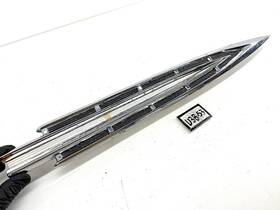
( Manufacturer Part Number: C3DB-16C098-E ), ( Type: Fender ), ( Vintage Part: Yes ), ( Finish: Chrome ), ( Placement On Vehicle: Front )
Review FORD Oem Front Fender Spear Trim fits FALCON SPRINT 1963
The **Ford C3DB-16C098-E 1963 Falcon Sprint Front Fender Spear (U3B-53)** is a meticulously crafted, high-quality reproduction part designed to restore the classic aesthetic and structural integrity of your 1963 Ford Falcon Sprint. This front fender spear, also known as the outer fender panel, is a precision-machined component engineered to match the original specifications of the iconic American muscle car. Crafted from durable, high-grade steel, it ensures both longevity and a perfect fit, allowing for seamless installation without warping or misalignment. The design captures the signature lines of the early 1960s Falcon Sprint, featuring clean, angular contours that accentuate the car s sporty silhouette while maintaining the authenticity of the original build. Whether you re restoring a show-quality classic or simply enhancing the visual appeal of your vintage Ford, this fender spear delivers uncompromising craftsmanship. Its compatibility with the U3B-53 engine bay configuration ensures that it aligns flawlessly with the surrounding panels, including the hood, cowl, and front fenders, preserving the car s original engineering integrity. For enthusiasts seeking both performance and period-correct styling, this part is an essential addition to any 1963 Falcon Sprint project, blending functionality with timeless design.
### **Pros and Cons of Buying a 1963 Ford Falcon Sprint with Front Fender Spear (U3B-53) and C3DB-16C098-E Engine**
#### **Pros**
1. **Classic Australian Muscle Car Heritage**
The 1963 Ford Falcon Sprint is an iconic Australian vehicle, representing the early days of local muscle cars. It holds significant cultural and historical value, especially for enthusiasts who appreciate the era s design and engineering.
2. **Strong Engine Options (C3DB-16C098-E)**
The **C3DB-16C098-E** engine is a **3.3-litre (200 cubic inch) inline-six** from the Falcon s early years. While not as powerful as later V8s, it is a well-built, reliable pushrod engine when properly maintained. Many examples can be restored to good condition with the right parts and care.
3. **Simpler Mechanics Compared to Later Models**
Early Falcons (pre-1966) have relatively straightforward mechanical designs compared to later models with more complex fuel injection and electronic systems. This makes repairs and modifications more accessible for those with mechanical skills.
4. **Potential for Restoration and Customization**
The Sprint s classic body style (especially with a **front fender spear**) makes it a great candidate for restoration. Enthusiasts can restore it to showroom condition or modify it for track use, drift, or street performance.
5. **Community and Support**
There is a strong **Australian classic car community** for Falcons, with aftermarket parts, restoration guides, and clubs dedicated to preserving these vehicles. This makes finding help and parts easier than for rarer imports.
6. **Lower Running Costs (If Well-Maintained)**
If the engine, transmission, and suspension are in good condition, running costs can be reasonable compared to modern cars. However, this depends heavily on maintenance history.
7. **Potential for Investment Value**
Well-preserved early Falcons, especially rare variants like the Sprint with a **front spear fender**, can appreciate in value over time, especially if demand for classic Australian cars continues to grow.
---
#### **Cons**
1. **High Maintenance Requirements**
The **C3DB inline-six** is not a high-performance engine by modern standards, and it requires **regular valve adjustments, timing belt changes (if applicable), and oil changes** to prevent wear. Neglect can lead to expensive repairs.
2. **Rust and Structural Issues**
Many early Falcons suffer from **rust**, particularly in the floor pans, suspension components, and body panels. A thorough inspection is essential to avoid hidden repair costs.
3. **Limited Power and Performance**
The **200ci inline-six** produces around **100-120 horsepower**, which is weak by today s standards. While modifications (like a **Yankee Six** or **V8 swap**) can improve performance, they add complexity and cost.
4. **Parts Availability Can Be Challenging**
While not as rare as some imports, **original parts for a 1963 Falcon** can be difficult to find. Many components must be sourced from aftermarket suppliers or restored from other Falcons.
5. **Driving Experience May Feel Outdated**
The **manual transmission (if fitted)**, basic suspension, and lack of modern safety features (airbags, ABS, etc.) make driving less comfortable and less safe compared to contemporary vehicles.
6. **Fuel Efficiency is Poor**
The inline-six is thirsty, especially on highways. Expect **around 10-12L/100km** in mixed driving, which is inefficient by modern standards.
7. **Insurance Costs Can Be High**
Classic cars often have **specialist insurance policies**, which can be expensive, especially if the vehicle is modified or used for track days.
8. **Potential for Hidden Mechanical Problems**
Many early Falcons have **worn-out transmissions, differentials, or suspension components** that require replacement. A **pre-purchase inspection (PPI) by a Falcon specialist** is highly recommended.
---
### **Conclusion**
Buying a **1963 Ford Falcon Sprint with a front fender spear and C3DB-16C098-E engine** is a rewarding but challenging endeavor. It is best suited for **enthusiasts who appreciate classic cars, enjoy mechanical work, and are prepared for high maintenance costs**. If you are looking for a **daily driver**, this car is not ideal due to its age, poor fuel economy, and lack of modern amenities. However, if you are passionate about **restoring, modifying, or preserving a piece of Australian automotive history**, it can be a fantastic project.
### **Recommendation**
- **Only purchase if you have:**- A **budget for restoration** (expect $5,000 $15,000 depending on condition).
- **Mechanical skills or access to a trusted mechanic** familiar with early Falcons.
- **Storage and transport** for a project car.
- **Patience** restoration takes time and effort.
- **If buying used:**- **Get a full pre-purchase inspection** from a Falcon specialist.
- **Check for rust, engine condition, and transmission health.**
- **Verify maintenance history** a well-documented car is worth more.
- **Best for:**- **Restoration projects** (show cars, track cars).
- **Enthusiasts who love classic Australian muscle cars.**
- **Those willing to invest time and money into bringing it back to life.**
- **Not ideal for:**- **Everyday driving** (unless fully restored to running condition).
- **Budget-conscious buyers** (expect ongoing costs).
- **Those who prefer modern convenience and safety.**
If you are serious about acquiring this Falcon, **start with a well-documented example, budget for repairs, and enjoy the process of bringing it back to its former glory.**
Details:
Many more FORD parts being listed, I just acquired a HUGE collection. Item has been in storage for over 40 years, includes everything pictured. Lots of NOS, I did my best with identifying the parts, if anything looks off please let me know. OEM 1963 Ford Falcon Sprint Front Fender Spear Trim.
part #: c3db16c098 prices
- $99.66-$124.95
specifications cartrimmouldings:
- for models: Falcon, Sprint
- for makes: Ford
- for years: 1963
- mpn: C3db-16c098-e
- type: Fender
- vintage part: Yes
- finish: Chrome
- placement on vehicle: Front
shipping cartrimmouldings:
- class: Standard
- cost: $12.95
- service: USPS Ground Advantage
- carrier: USPS
- type: Fixed
- transit: 5-11 Days
general cartrimmouldings:
- Car Truck Parts Accessories > Exterior Parts Accessories > Body Moldings Trims
- condition: Used
offer cartrimmouldings:
- sold: 0
- started: April 25, 2026
- options: Ship-to-home
- best offers: True
- availability: In Stock
- quantity: 1
payments cartrimmouldings:
- credit card: Mastercard
- other
- wallet: Paypal
returns cartrimmouldings:
- paid by: Seller
- policy: Returns Accepted
- time: 30 Days
seller cartrimmouldings:
- rating: 100.0%
- # reviews: 2240
- city: Suffield, Connecticut
Ford C3DB-16C098 Is Similar To:
- Ford 87 88 89 90 91 92 93 94 95 96 F150 Tailgate Tail Gate Trim Panel Mounting Brackets Screws Set Of 3 87-96 (26.5% similar) Set of three tailgate trim mounting brackets with screws. We prepare and ship items quickly after they are purchased. In good used condition...(October 8th, 2023)
- Zdl-kabusikikaisya1989us 211000813839 Carbon Fiber Inner Interior Steering Wheel Cover Trim Fit Ford F-150 2004-2008 (24.5% similar) Products are customized according to original sizes which fit perfectly. Carbon fiber inner interior steering wheel cover trim fit ford F-150 2004 -2008. All dimensions are measured by hand, there may be small deviations. Condition: 100% brand new. Make your car more cool. Products are made of high...(October 9th, 2023)
- Ford Cm5z-16019-a Genuine Fender Mtg Bkt Extension (42.6% similar) Genuine ford CM5Z-16019-A fender mtg BLT, extension...(October 10th, 2023)
- Hukyu 612047861508 8pcs Exterior Door Handle Bowl Cover Trim Chrome Abs For Ford F150 2015-2019 (25.1% similar) Material: made of high quality abs plastic. Easy installing, 3m adhesive tape is at the back. Installation method. 8PCS exterior door handle bowl cover trim chrome abs for ford F150 2015 -2019. Exterior door handle bowl cover trim chrome abs for ford F150 2015 -2019 8PCS. Provide eye-catching show...(October 12th, 2023)
- Karparts360 Klx-ksi-219017gq-cl360a51 For Ford Police Interceptor Utility 2020-2022 Wheel Arch Trim Driver Side Capa (21.3% similar) For ford police interceptor utility 2020 2021 2022 wheel arch trim driver side rear Capra certified pp plastic black on door replacement FO1790124, FO1790124C LB5Z7829165AA: item condition: brand new in original box, oem part #:LB5Z7829165AA, part slink #:FO1790124. All products ship in ...(October 16th, 2023)
- Ford Racing Performance Frpp M-1447-brmb 2021-2024 Bronco Raptor Oem Rear Tailgate Emblem Matte Black (24.3% similar) Brand new, ford performance part # M-1447-BRMB, for any 2021 -2024 bronco, original equipment on the 2022 -2024 bronco raptor, flat adhesive backing, can easily be installed interior or exterior flat surface, looks great wherever you choose to put it!, measures 5 x 4, matte black finish, easy peel...(October 24th, 2023)
- Ford Lj6z-8213-g New Oem 2020-2023 Escape Awd Chrome Liftgate Badge Decal (27.6% similar) ...(October 27th, 2023)
- Pit66 02rsa1280bdm-fl Front Left Fender Flare Wheel Well Arch Molding Trim Fits For 13-17 Ford Escape (30.1% similar) 1 PCs front left fender flare wheel well arch molding. Product introduction: title: front left fender flare wheel well arch molding a application: for 13-17 ford escape color: black, specifics and benefits: 100% brand new in box!, to protect your wheel from scratches, mud or other outer damage...(October 28th, 2023)
- Ford Fl3z-16278d12-ab Genuine Rear Right Body C-pillar Trim Panel Fl3z16278d12ab (38.2% similar) 2020 ford F-150 king ranch, lariat, limited, platinum, police responded, raptor, SS, XL, XLT 2.7L v6 - gas, 3.0L diesel, 3.3L flex, 3.5L 5.0L v8 flex. Included exactly what is pictured...(October 31st, 2023)
- Auxito Ck4z61405a26a Front Door Trim Pillar Molding Upper Lower For 15-19 Ford Transit 150 250 350 (27.1% similar) Material:abs. Features: superior material. Simple installation easy with direct replacement,other modifications are not required. Front door trim pillar molding upper lower for 15-19 ford transit 150 250 350 fits for: 2015 -2019 TRANSIT-150, TRANSIT-250, TRANSIT-350 for gas engine only. ...(November 19th, 2023)
- Cherocar Cherocar2019ab08b20212686 11pcs Interior Accessories Trim Kit Decoration Cover For Ford F150 2015-2020 Abs (12.8% similar) Easy to use and operate. Condition: 100% brand new. 11PCS interior accessories trim kit cover for ford F150 2015 -2020 abs. The installation has been completed, DI item - easy to install. Don't just take our word for it, either. Cause the same car model may be differently produced in different ...(November 24th, 2023)
