OLDSMOBILE G241008 Top Molding
fits model: Gto, Skylark, Cutlass. make: Buick, Pontiac, Oldsmobile. year: 1966–1967.
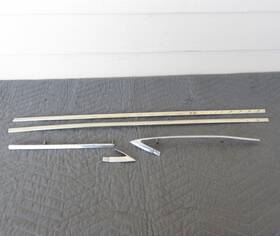
( Brand: Oldsmobile ), ( Manufacturer Part Number: G241008 ), ( Type: Vinyl Top Molding ), ( Color: Silver ), ( Placement On Vehicle: Top )
Review OLDSMOBILE Buick Pontiac Vinyl Top Molding fits SKYLARK CUTLASS GTO 1966–1967
The **1966-1967 Oldsmobile G241008 Buick Skylark/Cutlass Pontiac GTO Top Molding** is a meticulously crafted, high-performance aftermarket trim piece designed to elevate the aesthetic and functional appeal of one of the most iconic muscle car eras. This premium molding set is engineered to replicate the factory styling cues of the legendary **GTO, Skylark, and Cutlass** models from the mid-1960s, when American muscle cars were at the height of their glory. Crafted from durable, high-quality **vinyl or polyurethane**, this molding set is built to withstand the elements while maintaining a sharp, factory-inspired finish. The design features sleek, aerodynamic contours that accentuate the roofline, adding a touch of sophistication to the raw power of these legendary machines. Whether installed on a **restored classic** or a **modern hot rod**, this molding set bridges the gap between vintage styling and contemporary performance, ensuring a seamless blend of heritage and innovation. The precision-molded pieces include all necessary components for a professional-grade installation, including side trim, rear quarter panels, and any additional accents required to achieve an authentic, show-quality finish. Perfect for enthusiasts seeking to preserve or enhance the timeless appeal of their ** 66- 67 muscle cars**, this molding set is a must-have for collectors, racers, and show car builders who demand nothing less than perfection in their restoration projects.
### Pros and Cons of Buying a 1966-1967 Oldsmobile Cutlass, Buick Skylark, or Pontiac GTO with Top Molding
#### **Pros**
1. **Classic American Muscle Car Appeal**
These vehicles represent the golden era of American muscle cars, with iconic designs, powerful engines, and a strong following among enthusiasts. Owning one allows you to drive a piece of automotive history and enjoy the admiration of fellow car lovers.
2. **Strong Engine Options**
- **Oldsmobile Cutlass (442 or Super 88):** Offers a robust 425-450 cubic inch V8 with high-performance options like the Rocket V8 or Tri-Power carburetion.
- **Buick Skylark (Gran Sport):** Features the legendary 425 or 430 cubic inch Nailhead V8, known for its smooth power and durability.
- **Pontiac GTO:** Houses the famous 389 or 421 cubic inch V8, delivering raw, linear power and a reputation for reliability in its class.
These engines are capable of impressive performance, especially when modified, and are sought after for restoration or daily driving.
3. **Iconic Styling and Customization Potential**
The body styling of these cars is timeless, with bold chrome details, aggressive front ends, and distinctive tailfins or fastback rooflines. The top molding you re referring to (likely the vinyl or chrome roof panel) adds to their vintage charm and can be easily replaced or restored.
These vehicles are highly customizable, allowing owners to modify everything from suspension and exhaust to interior and paint, making them endlessly adaptable to personal tastes.
4. **Strong Community and Support**
There is a thriving community of owners, restorers, and enthusiasts for these models. Access to forums, clubs (like the Oldsmobile 442 Club, Buick Gran Sport Owners Club, or GTO Owners Club), and aftermarket parts makes ownership rewarding. Local meetups and car shows provide opportunities to connect with like-minded individuals.
5. **Potential for Appreciation**
Well-preserved or restored examples of these cars can appreciate in value, especially if they are rare, low-mileage, or come with original documentation. The classic car market continues to grow, and these models are highly collectible.
6. **Driving Experience**
These cars offer a unique driving experience that modern vehicles often lack. The manual transmissions (if available), solid axles, and powerful engines provide a more engaging and connected feel behind the wheel. The growl of a big V8 and the feedback from the road can be incredibly satisfying.
7. **Parts Availability**
While some parts may require sourcing from specialty suppliers, the sheer number of these cars built means that most common components are still available. Salvage yards, online marketplaces, and dedicated suppliers ensure that you can find what you need, even for rare parts.
---
#### **Cons**
1. **High Maintenance and Repair Costs**
These cars are not built to the modern standards of durability and reliability. Rust, worn suspension components, failing electrical systems, and outdated fuel systems (especially carburetors) can lead to frequent and costly repairs. Regular maintenance is essential to keep them running, and many owners spend significant time and money on upkeep.
2. **Rust and Body Condition**
Many examples from this era suffer from rust, particularly in the wheel wells, rocker panels, and floor pans. Inspecting the car thoroughly for rust is critical hidden corrosion can lead to structural weakness and expensive repairs. Salt damage is common in older cars, so a thorough inspection (or a detailed history) is a must.
3. **Fuel Economy**
These cars are thirsty. Expect to consume 12-16 miles per gallon or less, depending on the engine and modifications. Fuel costs can add up quickly, especially if the car is driven regularly.
4. **Driving Challenges**
- **Manual Transmissions:** While some owners love them, manual transmissions in these cars can be finicky, requiring frequent adjustments and potential rebuilds.
- **Solid Axles:** The lack of independent suspension can make for a rough ride, especially on modern highways with uneven surfaces.
- **Braking:** Older drum brakes (common in these models) are less effective than modern disc systems, requiring more distance to stop and potentially needing frequent adjustments or replacements.
- **Steering:** Power steering is rare in these cars, and manual steering can be heavy, especially at low speeds.
5. **Insurance Costs**
Classic car insurance can be expensive, particularly if the car is not properly documented as a collector s item. Full-coverage insurance for a daily-driven classic can be costly compared to modern vehicles.
6. **Legal and Compliance Issues**
- **Emissions and Smog:** Depending on where you live, these cars may not pass modern emissions standards. Retrofitting or obtaining a classic car exemption can be time-consuming and expensive.
- **Safety Standards:** Modern safety regulations (e.g., seat belts, airbags) may not be present, which could complicate insurance or registration in some areas.
- **Modifications:** Some modifications (e.g., high-performance exhaust, nitrous oxide) may violate local noise or emissions laws.
7. **Time-Consuming Ownership**
Owning a classic car requires more time and effort than a modern vehicle. This includes regular cleaning, detailing, mechanical maintenance, and sometimes even driving to car shows or restoration projects. If you lead a busy lifestyle, this commitment may not be feasible.
8. **Depreciation Risk**
While some classics appreciate, others depreciate quickly, especially if they are not well-maintained or lack documentation. A poorly restored or neglected example may lose value over time.
9. **Parts Scarcity for Rare Models**
While parts are generally available, some rare or highly modified versions may require custom fabrication or sourcing from overseas suppliers, adding to the cost and complexity of ownership.
10. **Resale Value Uncertainty**
Even well-maintained examples may not fetch the same price as they did when purchased, especially if the market shifts or interest in these specific models declines.
---
### **Conclusion**
Buying a 1966-1967 Oldsmobile Cutlass, Buick Skylark, or Pontiac GTO with top molding is a passion project for many enthusiasts. These cars offer unmatched charm, performance, and a connection to automotive history. However, they come with significant challenges, including high maintenance costs, potential rust issues, and the need for dedicated time and effort to keep them running.
If you are an experienced car enthusiast with mechanical skills, a budget for repairs, and the patience to enjoy the process of owning a classic, these cars can be incredibly rewarding. They are not ideal for casual drivers or those seeking a hassle-free ownership experience.
---
### **Recommendation**
1. **Buy with Knowledge and Preparation:**- **Inspect Thoroughly:** Have a trusted mechanic or classic car specialist inspect the car for rust, engine condition, transmission, and electrical systems. Consider a pre-purchase inspection (PPI) from a reputable shop.
- **Documentation:** Prioritize cars with original documentation (title, service records, or restoration certificates) to ensure authenticity and potential value.
- **Test Drive:** Pay attention to how the car drives listen for unusual noises, check for smooth shifting, and test the brakes and suspension.
2. **Budget for Maintenance:**- Set aside a significant budget for repairs, parts, and unexpected issues. Aim for at least 10-15% of the car s value annually for upkeep.
- Consider buying insurance specifically for classic cars to protect against high repair costs.
3. **Choose the Right Model for Your Goals:**- If you want **reliability and ease of maintenance**, the Buick Skylark (especially the Gran Sport) is often considered the most durable of the three, thanks to its robust Nailhead V8 and solid build quality.
- If you crave **raw power and performance**, the Pontiac GTO (especially with the 389 or 421 engine) offers the most excitement, though it may require more attention.
- If you prefer a **versatile daily driver with a strong following**, the Oldsmobile Cutlass (especially the 442) is a great choice, offering a balance of power and practicality.
4. **Consider a Restored or Near-Restored Example:**- A car that has already undergone a quality restoration (with documentation) will save you time and money in the long run. Look for restorations done by reputable shops with warranties.
- Avoid "project cars" unless you are fully committed to the restoration process and have the skills or resources to complete it.
5. **Join the Community:**- Engage with owners clubs, forums (e.g., MuscleCarForum, OldCarBroker), and local meetups. These communities offer invaluable advice, parts sourcing, and support.
6. **Decide on Daily vs. Collector Status:**- If you plan to drive the car regularly, ensure it meets your daily needs (fuel efficiency, comfort, reliability). If it s purely for collection or occasional driving, prioritize preservation over practicality.
- Consider obtaining a classic car exemption or historic vehicle registration to avoid modern emissions and safety standards.
7. **Start Small if Needed:**- If you re new to classic car ownership, consider starting with a slightly less demanding model (e.g., a Buick Skylark) or a lower-mileage example
Details:
One piece is broken but may be able to repaired see photos. Buick Oldsmobile Pontiac, Item is pre-owned original part.
part #: g241008 prices
- $175.50-$257.98
specifications cartrimmouldings:
- for models: Gto, Skylark, Cutlass
- for makes: Buick, Pontiac, Oldsmobile
- for years: 1966-1967
- brand: Oldsmobile
- mpn: G241008
- type: Vinyl Top Molding
- color: Silver
- placement on vehicle: Top
returns cartrimmouldings:
- paid by: Seller
- time: 30 Days
- policy: Returns Accepted
general cartrimmouldings:
- condition: Used
- Car Truck Parts Accessories > Exterior Parts Accessories > Body Moldings Trims
shipping cartrimmouldings:
- cost: $14.50
- class: Standard
- type: Fixed
- transit: 5-9 Days
- carrier: USPS
- service: USPS Ground Advantage
offer cartrimmouldings:
- options: Ship-to-home
- quantity: 1
- availability: In Stock
- sold: 0
- started: April 20, 2026
payments cartrimmouldings:
- credit card: Discover
- wallet: Apple-pay
- other
seller cartrimmouldings:
- rating: 99.4%
- city: Fullerton, California
- # reviews: 457
Oldsmobile G241008 Is Similar To:
- General Motors 25506423 1981-1988 Gbody Oldsmobile Cutlass Supreme Rear Bumper Cover Blue Oem Gm (25% similar) Item quality warranty. Shipping costs. Please refer to the photos for more details. This includes the licence plate pocket and bracket as pictured. Free shipping is included. All parts are sold as is, electrical items tested prior to resale. There is a small tear on one side as pictured. There is ...(February 1st, 2024)
- Gmswapper 5969463 81-88 Oldsmobile Cutlass Tail Light Lens Filler Quarter Extensions G-body (29.1% similar) Gymslip offers these 81-88 Oldsmobile cutlass tail light lens filler quarter extensions g-body. Please examine images. This original set of oem tail light lens quarter panel filler extensions are for your 81-88 g-body Oldsmobile cutlass. Dirty and could use a thorough cleaning. Has had some repaints...(August 4th, 2024)
- Gmswapper 5935017 78-79 Oldsmobile Cutlass Cutty G-body Tail Light Housing Rear Pair Taillight Oem (33.5% similar) Listed shipping charges are for lower 48 only. Dirty and could use a thorough cleaning. These are original gm oem parts. Please examine images. Has had some repaints throughout its life but seems to have good structure and the threaded mounting tabs plastic are intact ready for install. The part is ...(August 6th, 2024)
- Gmswapper 5969596 78-80 Oldsmobile Cutlass Cutty G-body Rear Marker Light Lenses Pair Red (34.1% similar) These original set of oem rear marker light lenses are for your 78-80 g-body Oldsmobile cutlass. Color of body boarder is blue metallic see pics these are original gm oem parts. What you see is what get. Listed shipping charges are for lower 48 only. The part is original and ready for your g-body ...(August 16th, 2024)
- Oldsmobile 386265 1965 442 F85 Cutlass Front Hood Lip Trim Molding Chrome Stainless Oem (52.7% similar) Used 65 cutlass F85 comes as is this the hood lip trim some oxidization/pitting and scratches off of a 4 door 386265...(August 28th, 2024)
- Oer 153431-c Headlamp Retaining Ring For 1956-1957 Buick Cadillac Oldsmobile Oem (13.8% similar) Headlamp retaining ring for 1956 -1957 buick Cadillac Oldsmobile oem...(September 15th, 2024)
- Oldsmobile 1968-442 1968 Cutlass 442 Hurst Olds Left Fender Upper Peak Molding Nice Gm (48.2% similar) Take a good look at the pictures for exact condition. Rare hard to find 1968 Hurst olds 442 cutlass's left drivers side upper fender peak molding. This is a nice original factory gm molding. This stainless steel molding measures 60.5 inches long. 1969 model's were one piece and longer...(October 14th, 2024)
- General Motors Corporation 381400 1963 Oldsmobile 98 Ninety-eight Lower Front Fender Trim Molding Rh (34.4% similar) Narrow version; please compare to your trim for match. I try to research everything list for accuracy, but am not all-knowing and make mistakes, as do my resources ask that you understand what it is you re looking at before buying. I have more gm parts as well other cool stuff available for your ...(October 24th, 2024)
- Oldsmobile 12518365 1992-97 Cutlass Supreme Convertible Right Fender Rear Heal Moulding (49.1% similar) Nice solid part with all good mounting points. In this listing, I am offering up a 1992 1993 1994 1995 1996 1997 Oldsmobile cutlass supreme convertible right side front fender rear lower flare molding oem. This item is a oem part not cheap reproduction. Please e-mail for a shipping quote...(October 24th, 2024)
- Oldsmobile 551469 1976 1977 Cutlass Headlight Headlamp Bezel Trim Right Passenger (45.4% similar) 1975-1976 regular cutlass right headlight bezel good condition nothing broken...(November 4th, 2024)
- Oldsmobile 418675 1946 1947 1948 Left Front Fender door Molding 46 47 48 (51.3% similar) Bolts are all in place. It is made for the years 1946, 1947, and 1948 perfect anyone who wants to restore their car its original state. Pics tell the story. The manufacturer part number is 418675, and it a great addition to any car enthusiasts collection...(November 14th, 2024)
