FORD 1968-1969F100 Corner Molding
fits make: Ford. year: 1967–1972.
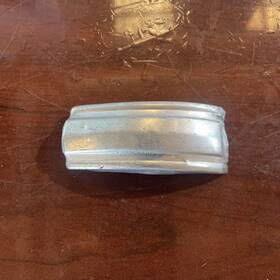
( Manufacturer Part Number: 1968-1969F100 ), ( Type: Cab Corner ), ( Color: Polished Aluminum ), ( Vintage Part: Yes ), ( Placement On Vehicle: Left, Right ), ( Country Of Origin: United States )
Review FORD Cab Corner Trim Molding Truck Nice Oem fits 1967–1972
The **Ford F-100 corner molding** from the **1967 through 1972 model years** represents a quintessential piece of classic American automotive design, blending rugged functionality with the bold, angular aesthetics that defined Ford s mid-century muscle and workhorse trucks. These corner moldings were meticulously crafted to accentuate the F-100 s sharp, aggressive stance, framing the truck s iconic boxy yet muscular silhouette with a clean, chrome-lined edge that exuded both strength and sophistication. Each molding features a **bold, slightly tapered profile** with a pronounced inner bevel, designed to follow the truck s clean, unadorned body lines while adding a touch of elegance to the otherwise utilitarian vehicle. The **chrome finish** is durable yet reflective, catching the light in a way that enhances the truck s presence, whether parked in a showroom or cruising down a rural highway. These moldings were not merely decorative they served a practical purpose as well, protecting the sharp edges of the truck s body panels from scratches and dents while adding a layer of sophistication to the otherwise utilitarian design. The **1968 and 1969 iterations** often feature a slightly refined contour, subtly differentiating them from the earlier 1967 models, while the **1970 through 1972 versions** maintain a consistent, slightly more streamlined look, reflecting Ford s gradual shift toward a more integrated, aerodynamic styling language. Whether installed on a **restored vintage F-100, a custom-built classic truck, or a modern hot rod**, these corner moldings instantly transport the vehicle back to an era when American trucks were as much about style as they were about power and capability. Perfect for enthusiasts seeking to preserve or enhance the authenticity of their Ford heritage, these moldings are a small but meaningful detail that completes the look of a true muscle truck or workhorse classic.
Buying a **Ford F-100 from 1968 to 1972** (with a focus on the **1968 1969 corner molding** for the 1967 1971 models) can be a rewarding experience for enthusiasts, but it also comes with significant challenges. Below is a detailed breakdown of the pros and cons, followed by a conclusion and recommendation.
---
### **Pros of Owning a 1968 1972 Ford F-100**
1. **Classic American Muscle and Heritage**
The F-100 from this era represents the golden age of American trucks, blending rugged utility with the styling cues of the time. The **1968 1969 models** are particularly sought after for their aggressive, rounded bodywork, chrome accents, and the iconic **1967 1971 corner molding** (a signature detail of the "Squarebody" F-Series). These trucks evoke nostalgia and are highly recognizable among vintage truck enthusiasts.
2. **Strong Engine Options**
Ford offered a variety of engines in this range, including:- **292 V8 (2-barrel or 4-barrel carburetor)** A reliable workhorse, especially in the 292 4V version, which could produce around **200 250 hp** with modifications.
- **302 V8 (2-barrel or 4-barrel)** Introduced in 1968, this engine was more refined and could be tuned for better performance.
- **351 Cleveland V8 (1970 1972)** A more powerful option (around **250 300 hp** in high-performance trim) that added muscle to the lineup.
- **390 V8 (1967 1969)** A heavy-duty option for towing and hauling, though less common in passenger models.
These engines are relatively straightforward to work on, with a wealth of aftermarket support available.
3. **Durable and Simple Mechanics**
The **1968 1972 F-100** was built with durability in mind. The **RWD (rear-wheel-drive) layout** is robust, and the **manual transmissions (4-speed or 3-speed)** are known for longevity if maintained properly. The **live axle and leaf springs** are simple and easy to repair, making them attractive to mechanics who prefer "no-frills" vehicles.
4. **Customization Potential**
These trucks are **blank canvases** for restoration and modification. The **1968 1969 styling** (with its **corner molding, rocker panel accents, and chrome details**) is highly customizable. Owners can restore them to showroom condition or modify them for a **modern muscle truck** look with aftermarket suspension, exhaust, and performance upgrades. The **1967 1971 corner molding** is a key aesthetic feature that many restorers prioritize.
5. **Community and Enthusiast Support**
The **Ford F-Series, especially from the late 1960s and early 1970s, has a strong enthusiast community**. There are numerous **restoration forums, clubs (like the Ford F-100 Club), and aftermarket parts suppliers** dedicated to these trucks. This makes finding help, parts, and advice relatively easy.
6. **Potential for Low Cost of Ownership (If Well-Maintained)**
If you purchase a **project truck** or a **well-documented used example**, the **running costs can be reasonable**. Basic maintenance (oil changes, brake work, suspension repairs) is often cheaper than modern trucks, especially if you handle some of the work yourself.
7. **Resale Value for Restored Examples**
A **fully restored 1968 1972 F-100** (especially with original or period-correct parts) can appreciate in value, particularly if it s in **show-quality condition**. The **1968 1969 models** are often the most desirable due to their styling.
---
### **Cons of Owning a 1968 1972 Ford F-100**
1. **High Maintenance Requirements**
While the mechanics are simple, **rust is the biggest enemy** of these trucks. Many examples from this era suffer from **frame rot, rusted axles, and deteriorated body panels**, especially in snowy or coastal climates. A **thorough inspection** is essential before purchase.
- **Common rust areas**: Rocker panels, wheel wells, frame rails, and undercarriage.
- **Suspect welds**: The **1967 1971 body styles** had some structural weaknesses in the frame and body seams.
2. **Electrical and Interior Wear**
The **electrical systems** (especially in older examples) can be finicky, with **failing wiring, corroded connectors, and outdated components**. The **interiors** (vinyl, carpet, and upholstery) often degrade over time and may require full replacement during restoration.
- **1968 1969 interiors** were more premium than later models but still prone to cracking plastic and worn-out materials.
3. **Fuel Economy and Modern Standards**
These trucks **do not meet modern emissions or safety standards**, so they cannot be legally driven in many areas without modifications (like **EPA-approved catalytic converters** or **smog compliance**). If you plan to drive it daily, you ll need to **register it as a "non-street legal" vehicle** or modify it for compliance, which can be costly.
4. **Limited Modern Comforts**
- **No power steering or power brakes** (standard in later models).
- **Basic climate control** (no modern HVAC systems).
- **Manual transmissions** are common, which may not suit modern drivers accustomed to automatic transmissions.
- **Poor fuel efficiency** (expect **8 12 MPG** in a stock condition).
5. **Parts Availability and Cost**
- **Original parts** (especially for **1967 1969 models**) can be **expensive or hard to find**, driving up restoration costs.
- **Aftermarket parts** are widely available, but **reproduction vs. original** can be a debate some enthusiasts prefer **period-correct parts** for authenticity.
- **Body panels** (especially **fenders, rocker panels, and hoods**) may need to be **custom fabricated** if rusted beyond repair.
6. **Driving Experience Limitations**
- **Poor handling** compared to modern trucks (stiff suspension, limited shock absorption).
- **No modern safety features** (no ABS, airbags, or advanced braking systems).
- **Poor visibility** in some cases due to **bulky body styling** and **limited side mirrors**.
7. **Insurance and Registration Challenges**
- **Insuring a classic truck** can be expensive, especially if it s not fully restored.
- **Registration may require proof of restoration** or a **restricted license plate** (for non-street-legal examples).
- **Smog and emissions testing** can be difficult or impossible without modifications.
8. **Time and Skill Intensive**
Restoring or maintaining one of these trucks **requires significant time, mechanical skill, and patience**. Many owners **underestimate the scope of work** needed to bring one back to showroom condition.
---
### **Conclusion**
Owning a **1968 1972 Ford F-100** (with a focus on the **1968 1969 styling and 1967 1971 corner molding**) is a **passion project** rather than a practical daily driver. These trucks are **ideal for enthusiasts who appreciate classic American design, mechanical simplicity, and the challenge of restoration**. They offer **strong engine options, customization potential, and a sense of heritage**, but they come with **high maintenance demands, rust issues, and limited modern functionality**.
If you are **willing to invest time, money, and effort** into restoring or maintaining one, the reward can be a **show-stopping, highly desirable truck**. However, if you prioritize **convenience, fuel efficiency, and modern safety**, this is **not the right choice**.
---
### **Recommendation**
1. **If You re Buying for Restoration:**- **Prioritize a 1968 or 1969 model** (they hold the most value and are the most sought after).
- **Look for a truck with minimal rust** (check frame, axles, and body seams thoroughly).
- **Verify the engine and transmission condition** a **clean 302 or 351 Cleveland** is ideal.
- **Budget for a full restoration** (expect **$10,000 $30,000 ** depending on condition).
- **Join restoration forums** (like **Classic Ford Truck Club** or **Ford F-100 forums**) for advice on specific projects.
2. **If You re Buying for Driving (With Modifications):**- Consider a **1970 1972 model** (slightly more modern features like **better interiors and emissions compliance options**).
- Ensure the truck **me
Details:
See pictures for exact condition.
part #: 1968-1969f100 prices
- $41.99-$625.00
specifications cartrimmouldings:
- for makes: Ford
- for years: 1967-1972
- mpn: 1968-1969f100
- type: Cab Corner
- color: Polished Aluminum
- vintage part: Yes
- placement on vehicle: Left, Right
- country of origin: United States
offer cartrimmouldings:
- options: Ship-to-home
- started: May 11, 2026
- best offers: True
- quantity: 1
- availability: In Stock
- sold: 0
general cartrimmouldings:
- Car Truck Parts Accessories > Exterior Parts Accessories > Body Moldings Trims
- condition: Used
returns cartrimmouldings:
- policy: No Returns
shipping cartrimmouldings:
- carrier: USPS
- service: USPS Ground Advantage
- type: Calculated
- transit: 4-8 Days
- class: Standard
- cost: $5.72
payments cartrimmouldings:
- money order
- other
- credit card: Discover
- wallet: Paypal
seller cartrimmouldings:
- city: DeLand, Florida
- rating: 100.0%
- # reviews: 25
Ford 1968-1969F100 Is Similar To:
- Ford Cj5z-16268-ac Genuine Wheel Opening Molding (34.1% similar) Without auto park...(October 5th, 2023)
- Ford 87 88 89 90 91 92 93 94 95 96 F150 Tailgate Tail Gate Trim Panel Mounting Brackets Screws Set Of 3 87-96 (33.7% similar) Set of three tailgate trim mounting brackets with screws. We prepare and ship items quickly after they are purchased. In good used condition...(October 8th, 2023)
- Zdl-kabusikikaisya1989us 211000813839 Carbon Fiber Inner Interior Steering Wheel Cover Trim Fit Ford F-150 2004-2008 (30.5% similar) Products are customized according to original sizes which fit perfectly. Carbon fiber inner interior steering wheel cover trim fit ford F-150 2004 -2008. All dimensions are measured by hand, there may be small deviations. Condition: 100% brand new. Make your car more cool. Products are made of high...(October 9th, 2023)
- Hukyu 612047861508 8pcs Exterior Door Handle Bowl Cover Trim Chrome Abs For Ford F150 2015-2019 (29.7% similar) Material: made of high quality abs plastic. Easy installing, 3m adhesive tape is at the back. Installation method. 8PCS exterior door handle bowl cover trim chrome abs for ford F150 2015 -2019. Exterior door handle bowl cover trim chrome abs for ford F150 2015 -2019 8PCS. Provide eye-catching show...(October 12th, 2023)
- Karparts360 Klx-ksi-219017gq-cl360a51 For Ford Police Interceptor Utility 2020-2022 Wheel Arch Trim Driver Side Capa (18.7% similar) For ford police interceptor utility 2020 2021 2022 wheel arch trim driver side rear Capra certified pp plastic black on door replacement FO1790124, FO1790124C LB5Z7829165AA: item condition: brand new in original box, oem part #:LB5Z7829165AA, part slink #:FO1790124. All products ship in ...(October 16th, 2023)
- Goldenlion Yc3z-2551728-ptm Black Left Right Side Roof Molding For 1999-2007 Ford F250 F350 F450 Super Duty (26.8% similar) 2 x roof molding. Oe/oem part no. Fit position. YC3Z-2551728-PTM,YC3Z-2551729-PTM. Manufacturer parts no. Manufacturer warranty. This will save time to process and get you money back. Black left right side roof molding for 1999 -2007 ford F250 F350 F450 super duty specifications...(October 19th, 2023)
- Ford Racing Performance Frpp M-1447-brmb 2021-2024 Bronco Raptor Oem Rear Tailgate Emblem Matte Black (23.4% similar) Brand new, ford performance part # M-1447-BRMB, for any 2021 -2024 bronco, original equipment on the 2022 -2024 bronco raptor, flat adhesive backing, can easily be installed interior or exterior flat surface, looks great wherever you choose to put it!, measures 5 x 4, matte black finish, easy peel...(October 24th, 2023)
- Ford Lj6z-8213-g New Oem 2020-2023 Escape Awd Chrome Liftgate Badge Decal (22.5% similar) ...(October 27th, 2023)
- Pit66 02rsa1280bdm-fl Front Left Fender Flare Wheel Well Arch Molding Trim Fits For 13-17 Ford Escape (30.9% similar) 1 PCs front left fender flare wheel well arch molding. Product introduction: title: front left fender flare wheel well arch molding a application: for 13-17 ford escape color: black, specifics and benefits: 100% brand new in box!, to protect your wheel from scratches, mud or other outer damage...(October 28th, 2023)
- Ford Fl3z-16278d12-ab Genuine Rear Right Body C-pillar Trim Panel Fl3z16278d12ab (32.3% similar) 2020 ford F-150 king ranch, lariat, limited, platinum, police responded, raptor, SS, XL, XLT 2.7L v6 - gas, 3.0L diesel, 3.3L flex, 3.5L 5.0L v8 flex. Included exactly what is pictured...(October 31st, 2023)
- Ford Oe Mb3z21290d12ma For Ranger 2021 Rear Truck Bed Decal (34.2% similar) Rear truck bed decal MB3Z21290D12MA by ford oe. Installs with no modifications to your vehicle. Offers dependability and quality backed by the ford name. Manufactured to strict specifications for fit, form, and function, they not only help restore original performance but also install in no time ...(November 2nd, 2023)
